Famous Soda Pops I Have Known, Vol. VII: Yoo-hoo and Egg Creams

I really had no plan to post so many soda pop discussions in a row, but people keep making comments when I share the posts in The Gomer and Goober Comic Book Literary Guild page that prompt another post.
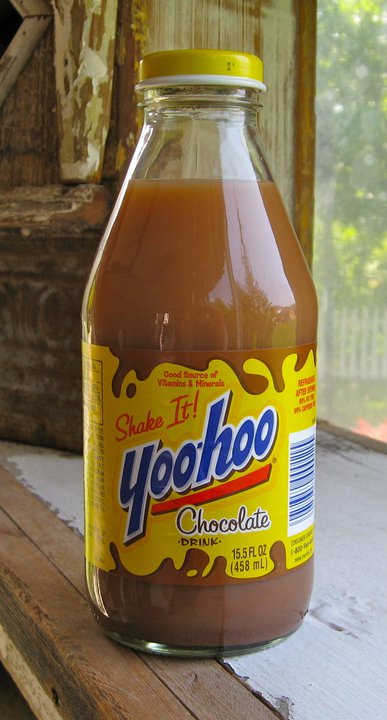
When I discussed Choc-Ola, I mentioned that it differed from the popular Yoo-hoo in that it contained 40% actual milk. Yoo-hoo contains only whey derived from milk and nonfat dry milk and is sweetened with high fructose corn syrup. Still, Yoo-hoo has been around since 1926. It used to contain real dairy. The Italian-American who invented it already sold a line of fruit drinks that were generically called Yoo-hoo. While watching his wife preserving homemade tomato sauce, he hit upon the idea that led to a process to make a chocolate soft drink that wouldn’t spoil. After perfecting the process, the same term “Yoo-hoo” was also used for the new chocolate beverage.

Yoo-hoo became best known in the 1950s and ‘60s after a promotional campaign that featured the World Champion New York Yankees touting the drink. Yogi Berra was usually shown wearing a suit while drinking one, with the phrase, “It’s Me-he for Yoo-hoo.” The drink still sporadically appears in popular culture, from A Few Good Men to Friends to “The Bubble Boy” episode of Seinfeld.

One blog follower noted she sometimes made an egg cream as a substitute for Choc-Ola. The famed “New York Egg Cream” is a fountain drink that contains neither egg, cream, nor ice cream. It is usually associated with New York City, especially Brooklyn. The egg cream is believed to have been invented there in the 1890s by a Jewish immigrant candy store owner, Louis Auster. It is made with chocolate syrup, whole milk, and seltzer. The syrup gives a creamy consistency and the rich flavor made some believe it contained egg. Hence the name contrary to the actual ingredients. 

An egg cream done right at Junior’s Restaurant in Times Square.
My travesty of an attempt to make an egg cream before ever tasting one.

I had the pictured egg cream at Junior’s Restaurant in Times Square, but on a previous trip there I bought a pint glass at Junior’s without actually tasting an egg cream at the time. When I returned home, I foolishly attempted to make my own egg cream before ever actually tasting one. It was a miserable failure due to my lack of research into how to properly prepare the drink. My glass from Junior’s in Times Square is misleading if followed literally. “Fill up with seltzer” means fill until the foam head fills the glass. As you can see, before stirring I let the foam dissolve and kept adding seltzer until I had literally filled the glass. I now know the drink has to have a head and if the straw won’t stand up in the foam without touching the sides, “you done it wrong.” I’ve also now learned that Fox’s U-Bet Chocolate Syrup is a necessity with most sources saying using a national brand like Hershey’s will result in an inferior egg cream. (Naturally, I bought U-Bet at a grocer while there.) The lack of a high-pressure siphon nozzle used in the actual fountain drink also results in some difference in a homemade egg cream.

Jeff’s Chocolate Soda Amazing New York Egg Cream is an attempt to create a bottled version of the egg cream fountain drink. It’s made with the same general ingredients but undergoes a process similar to Yoo-hoo that allows the dairy in it not to spoil. (The beverage industry had to create a new category for this soda: “dairy-based carbonated beverage.”)

This bottled version obviously does not have the foam head of the fountain drink made fresh, but the flavor is surprisingly close. The company is actually based in Illinois and began offering these bottled egg creams in the 1990s.

Mayberry in the Midwest 2019, Part I

Last weekend was the annual Mayberry in the Midwest festival held in Danville, Indiana. I attended the event for the first time in 2017 and again in 2018, but during those years I drove over and back on Saturday. People in the know urged me not to miss the opening night event, a “meet-and-greet” dinner which included this year for the first time a silent auction. I am so glad I took their advice. I attended Mayberry in the Midwest from Friday evening through Sunday afternoon.

Standing by the local Aunt Bee tribute artist by my donation. The signs described the upcoming Mayberry Firsts and the 2020 Mayberry Day-by-Day Flip Book Calendar.

One of the event organizers asked me to make a donation for the silent auction so I came a bit early to set up the items. Regina, the lucky winner, got from Liberty Grove Press our out-of-print 2019 Mayberry Day-by-Day Flip Book Calendar, one of our Andy & Opie t-shirts, and will be the first to receive Mayberry Firsts and the 2020 Mayberry Day-by-Day Calendar as each is received from the printer. I also want to give a shout-out to my high school buddy, Elvin, who donated a unique handmade pen that was included as part of a great Mayberry gift basket that someone was lucky enough to win. The silent auction raised over $2000 for the festival, by the way!

Gift basket that included Elvin’s pen.
Close-up of Elvin’s handmade pen.

A couple of months ago, I was surprised to receive an email from Dixie Griffith, Andy Griffith’s daughter, telling me how much she enjoys the current calendar. I had sent one as a gift to her through a mutual friend and, needless to say, that email made my week. While I have seen Dixie a couple of times at festivals from afar since she is one of the two tribute artists who portray the “fun girls from Mount Pilot,” I had never actually met her. She asked me to be sure to introduce myself and I was able to do so at the meet-and-greet dinner.

One last point to mention is that I was lucky enough to sit with Mayberry friends Johnna, Robert, and Marsha at the dinner. This worked out especially well as Johnna and I discussed a speaking presentation I will be making in Missouri in 2020! More details will eventually follow.

Warding off the Henry Bennett hex with Newton Monroe.

After a wonderful evening with Mayberry friends, I drove to my cousin’s house who had generously offered to let me stay with him during the festival. This was an extra special treat for me as Darrell and his brother Robert were two of my favorite cousins growing up. They lived in Indianapolis but we saw them frequently whether through mutual visits or both being in Eastern Kentucky at the same time visiting our grandma.

That is Maggie “Charlene Darling” Mancuso on the left of the photo.

Staying with Darrell was also a bonus because the local hotels all around Indianapolis raise their rates drastically during the weeks leading up to the Indianapolis 500 during time trials for the race. The only “downside” (and I am using that word facetiously) is how late we stayed up talking since we don’t get to see one another often enough.

The next morning, Robert met us at a nearby diner called the Knuckle Sandwich, a little restaurant in Martinsville housed in what used to be a Dairy Queen. It was great to see Robert again. We said our goodbyes after a great breakfast and I headed back to Danville.

Famous Soda Pops I Have Known, Vol. VI: Choc-Ola

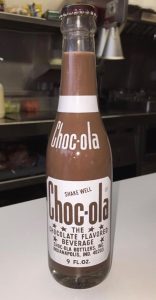
Choc-Ola as it used to be bottled.

When I shared my blog post on Sun-Crest Orange and NuGrape last week in my Facebook group, a friend said they were two of his favorites along with Choc-Ola.

The beverage is arguably not really a pop but, like Yoo-hoo, it was sold in bottles and cans in the same section of the store as other soda pops and the cans were available in pop vending machines. I say “was sold” because Choc-Ola was phased out of production in 2003.

Choc-Ola was created by Harry Normington, an English immigrant who eventually settled in Indianapolis. He began selling Choc-Ola in 1944. It became extremely popular in Indiana and surrounding states, never more so than when it was touted by Cowboy Bob, the host of an Indianapolis kid’s show. At the height of its popularity, it was sold in 1977 to Moxie who sold it eight years later to Yoo-hoo. In 2003, Mott’s bought the company and promptly phased out Choc-Ola.

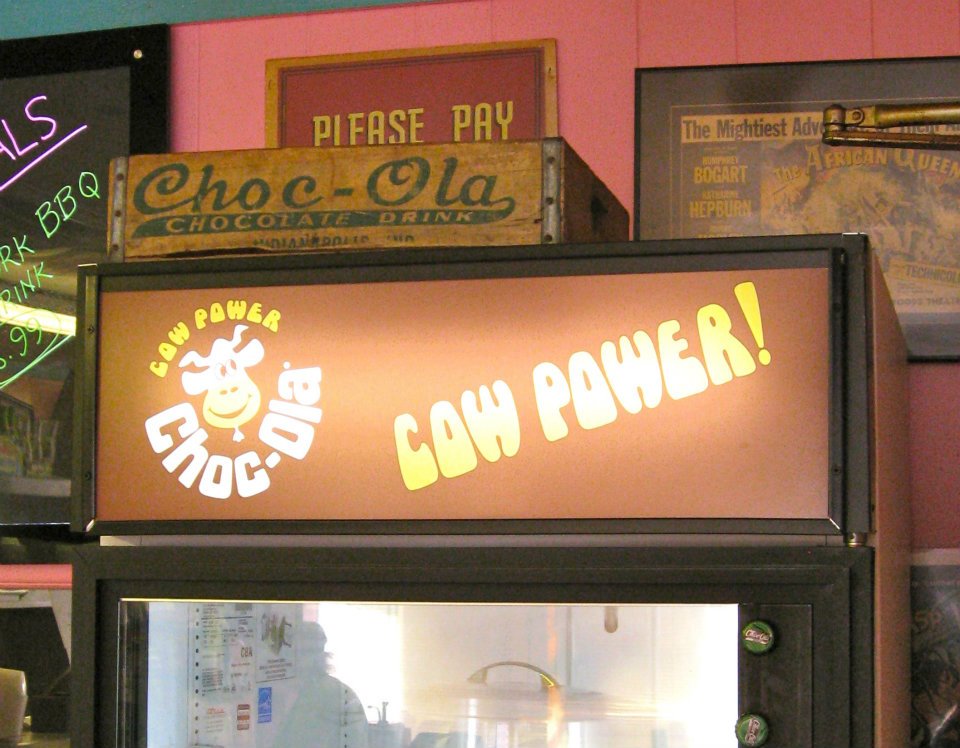
Choc-Ola cooler and old wooden Choc-Ola crates as displayed at the Rock-Cola Cafe.

The drink was only available in the occasional bottle that lingered on Indiana store shelves afterward. But in 2010 the owner of the Rock-Cola ‘50s Cafe in Indianapolis secured the expired patent and trademark and now sells it at his restaurant.

The Rock-Cola Cafe in Indianapolis.

The plan had been for Choc-Ola to be released in cans and thus be more widely available. In fact, a few years ago, some friends told me they had seen cans at the Indiana State Fair, but the canning venture did not work out. At this point, the only place to get Choc-Ola is at the Rock-Cola diner in Indianapolis.

The Rock-Cola Cafe as it appeared when Barry and I visited. They have since added the Choc-Ola signage.

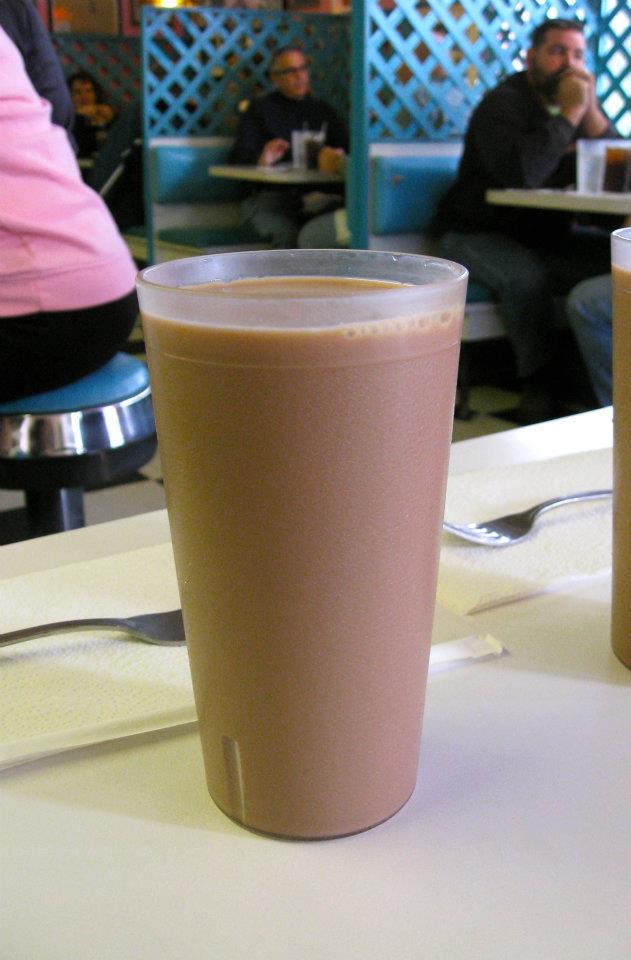
My buddy, Barry, and I sought out the oh-so-illusive beverage few years ago and made a trip to the Rock-Cola ‘50s Cafe. Choc-Ola is similar to Yoo-hoo but has a creamier, richer chocolate flavor. The main reason for this is that Choc-Ola actually has nutritional value as it is 40% milk. The owner of Rock-Cola says the main difference between Choc-Ola and Yoo-hoo is that Choc-Ola tastes good. I agree that Choc-Ola we tasted was truly better than Yoo-hoo, but I may have been partially swayed by the fact that I was enjoying a delicious Hawg Dog at the cafe too.

The only way to currently enjoy Choc-Ola.

Mayberry Firsts Book Announcement

We are happy to announce that our first traditional book will be released soon. Mayberry Firsts is written by Mayberry expert Randy Turner. The 224-page softcover book contains dozens of short-form essays about The Andy Griffith Show. Far more than a checklist of the first time something was seen in the show, the “firsts” are used as springboards for in-depth discussions of the background and history of The Andy Griffith Show.

For those who may be familiar with my occasional posts using the same title in my Facebook group, please know that these are not verbatim reprints. These are far more detailed discussions and the majority of these essays are completely new for the book.

The book is anticipated to be released in early July in several waves. The very first copy will be sent to Regina,  the winner of a silent auction held at Mayberry in the Midwest. People who pre-ordered the book at my recent presentation at the Clermont County library and charter members who ordered our first publication before it was printed who pre-order this book will make up the second release wave. Those who ordered our first publication last year after it was printed will be contacted soon to allow them to pre-order with free shipping. Those that order this book will be the third wave. Finally, the book will be released to the general public.

We are excited to share the newest book about The Andy Griffith Show with the Mayberry community.

Famous Soda Pops I Have Known, Vol. V: Sun Crest Orange and NuGrape

Our main man with an ice cold bottle of Nehi.

Last week, I posted about orange Nehi and included a photo of Andy gleefully holding a bottle. As popular and ever-present as Nehi was, my guess this may well have been what Andy had in mind when he originally mentioned a “big orange drink” in his comedy monologue What It Was Was Football.


Recording as Deacon Andy Griffith, in the routine, Griffith told the story of a country bumpkin seeing a football game for the first time and not understanding what it was. For example, he described the field as “a purty, little green cow pasture” that “somebody had took and drawed white lines all over it.”

As the comedy monologue opened, the narrator said, “And we come up on a big sign,  it says, ‘Get somethin’ to eat ‘chere.’ And I went up and got me two hot dogs and a big orange drink.” He soon dropped his drink. Once inside and hearing each group of people yell, he asked a man why everyone was yelling. “Well, he whopped me on the back and he says, ‘Buddy, have a drink!’ Well, I says, ‘I believe I will have another big orange.’”

Regardless of whether Andy had Nehi in mind, once his comedy recording became a big hit, he agreed to appear in advertisements for Sun Crest Orange.

Sun Crest ad as displayed in The Andy Griffith Museum in Mount Airy, North Carolina.

The brand Sun Crest was introduced by the National NuGrape Company in Atlanta in 1938. While I don’t have a photo of a Sun Crest pop I have tried, I have had the original main flavor of the company, NuGrape.

NuGrape Soda is a grape pop invented in 1906 and first bottled in 1921 in Atlanta. Ownership of the brand has changed hands several times but the formula remains the same, still sweetened with cane sugar. This is a very sweet and refreshing pop with a strong grape flavor that aficionados often claim as the truest and juiciest grape taste (though it contains no juice).

More than four decades after the company introduced NuGrape and Sun Crest and before it was sold the first time, it launched the previously discussed Kickapoo Joy Juice in 1965. The company was sold to another soda company in 1968 and now, like many classic pops, is bottled by different companies which recognize and preserve these older brands. 

Heart in Hand Needleart, Part IV

As previously mentioned, like all craft industries, cross stitch can be cyclical in its popularity. It is currently undergoing a tremendous upswing.

There are lots of reasons for this, but one contributing factor is the popularity of YouTube channels called FlossTube. (Floss is another name for the thread used to create cross stitch.)

I was not really aware of FlossTube until Cecilia asked me to do a drawing for her of two local women who host a FlossTube show.

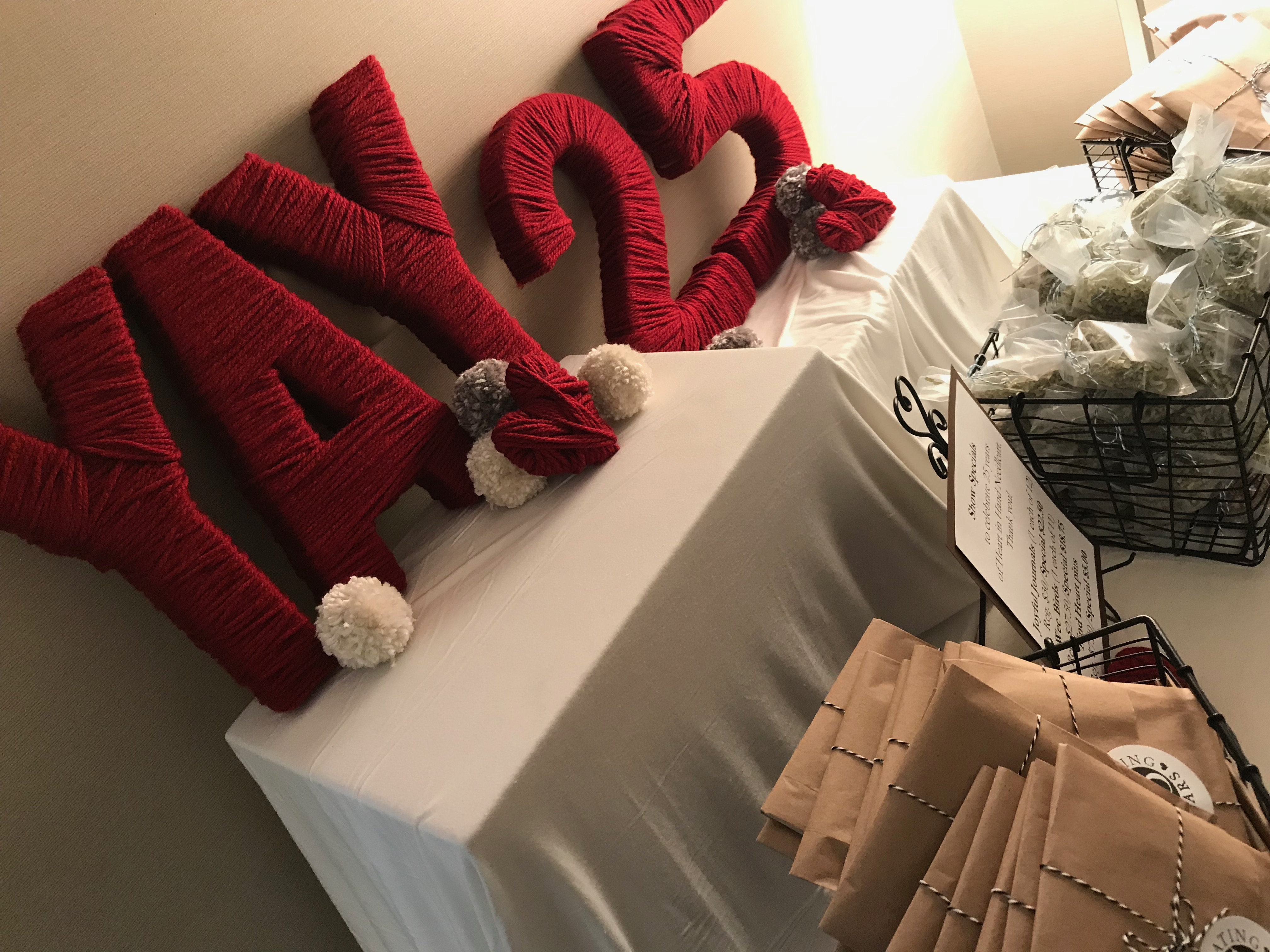
Cecilia’s design Spread Kindness contains 25 hearts to symbolize her 25th year in the industry.

Cecilia’s company, Heart in Hand Needleart, is also part of another company called The Trilogy. This company occasionally releases charts designed jointly by Heart in Hand and two other cross stitch lines owned by dear friends of ours, Bent Creek and Twisted Threads. The Trilogy and the three individual companies planned to send a representative sampling of designs to the local women to discuss on their FlossTube channel.

Pam and Steph are a mother and daughter in a neighboring town. They host a popular FlossTube channel they call Just Keep Stitching. Cecilia asked me to do a drawing of the two of them which she would use on a card that accompanied the designs she was sending. I watched part of Pam and Steph’s show to get a screen grab to use for the drawing.

I don’t do as much artwork as I should. I always enjoy it when I do. But I have to say that watching Pam and Steph’s reaction to the drawing was priceless!

If interested, this is a short clip about a connection between Pam and my oldest daughter.

Pam and Steph now use my drawing on their business cards and social media. Thanks to Pam and Steph and the many other people hosting their popular FlossTube shows!

By the way, if you want to learn more about Heart in Hand Needleart, visit our website at http://heartinhand.com/ to see all the designs or read profiles of Cecilia under “About.” She was also recently the featured guest on a FlossTube program, Fiber Talk.

Famous Soda Pops I Have Known, Vol. IV: Orange Nehi

Our main man with an ice cold bottle of Nehi.

The Chero-Cola company began production in 1904. It introduced Nehi’s fruit-flavored sodas in 1924 which immediately outsold Chero-Cola and were so popular that by 1928 the company changed its name to Nehi Corporation. Their orange soda is a classic. 

As a child, when we stayed at the same grandma’s where I walked to get the Kickapoo Joy Juice, if a lot of relatives were staying there we sometimes had this with breakfast! (This is the first pop I’ve shown that is flavored with the now standard high fructose corn syrup.)


In the early 20th century, the advertising logo of Nehi was a picture of a woman’s leg with stockings up to the knee, suggesting the phrase “knee-high”. The concept continued to be used for several decades.

In the perennial holiday favorite, A Christmas Story, a leg lamp (also known as a major award) figures prominently in the story.

Author Jean Shepherd was inspired to create the leg lamp after seeing an illuminated Nehi Soda advertisement. In the original story “My Old Man and the Lascivious Special Award That Heralded the Birth of Pop Art,” the leg was the logo of the contest’s sponsor, Nehi. (The details of the contest were not made clear in the film, A Christmas Story.)


Heart in Hand Needleart, Part III

Heart in Hand Needleart, the counted cross stitch company founded and run by my wife, is celebrating its 25th anniversary this year. Cecilia is one of the more popular designers working in the field.

The Tom Turkey Sampler is one of Cecilia’s popular monochrome designs.

I previously described how we attended our first trade show and then launched Heart in Hand. Cecilia designs each piece and most always stitches it herself. The stitched piece is then either stretched onto a piece of foam core using pins and then framed or is finished in other, less traditional and more creative way. We then have the finished piece professionally photographed. Stitching directions—in essence, a grid with symbols, each symbol representing a specific color of thread—is prepared. Occasionally specific directions also have to be included for specialty stitches that are more than the traditional Xs used with cross stitch. A graphic artist and Cecilia work together to turn the photo and stitching directions into a chart.

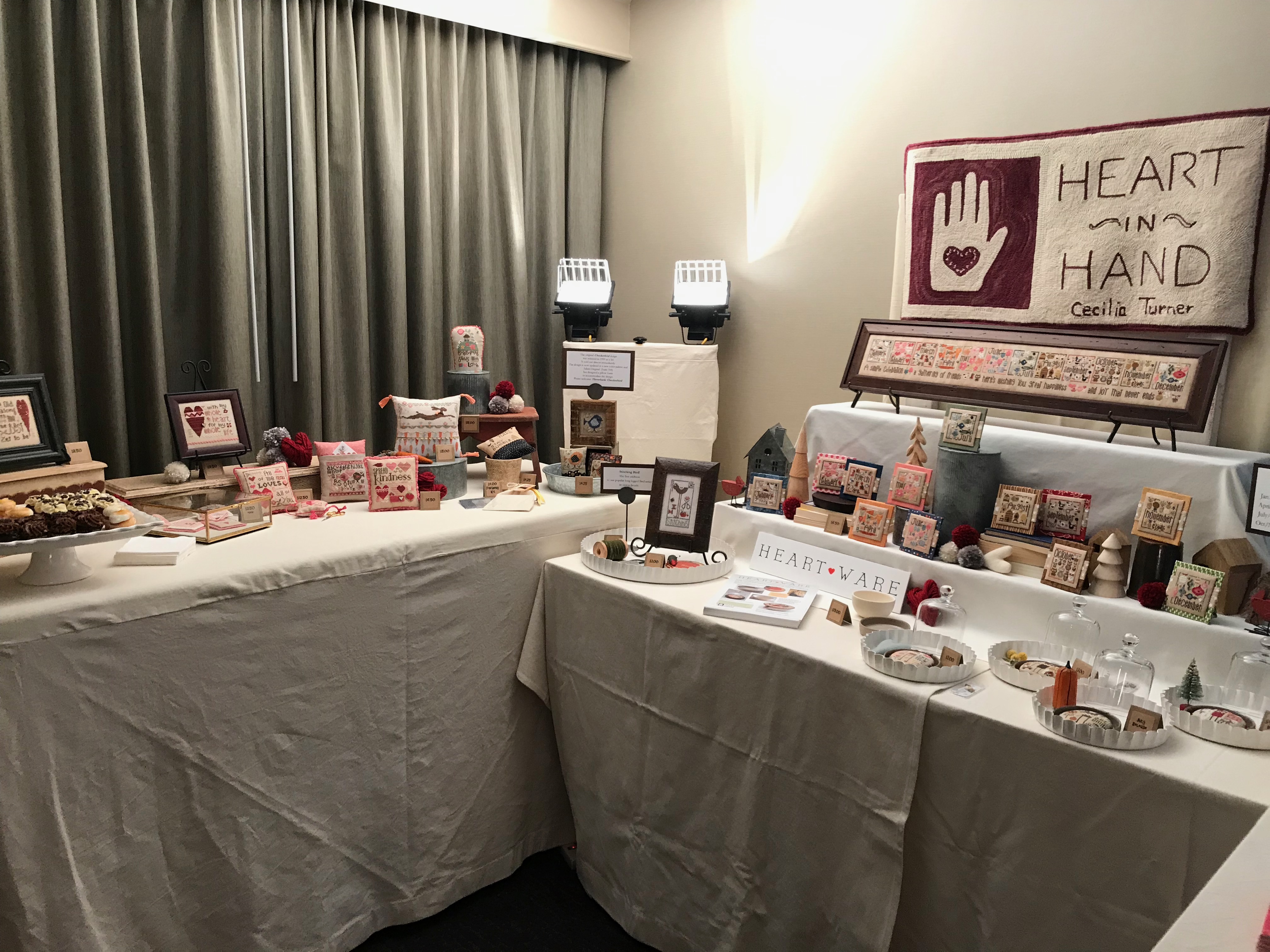
The trade show fives shop owners from around the world to see what the designs look like in person. Our “shop” is a completely transformed front room of an Embassy Suites where the trade show is held each year.
Cecilia is quite creative in creating novel and interesting ways to display the models.

The finished chart is how many of the designs are then sold to the public. Others are included in kits including not only the design but fabric, threads, embellishments such as buttons, finishing materials, or any combination of the preceding depending on the kit. We do not sell directly to the public. Cross stitch shops buy the designs directly from us or from one of several international distributors we use.

By the way, people often have humorous misconceptions about Cecilia’s company. For example, at one point we had a vanity plate on a vehicle that read HRTNHND. I had several people tell me how much they liked the plate, and then ask, “So you’re a heart surgeon, right?” A more current example is that when I give the full name of the company (Heart in Hand Needleart), I will occasionally have people pause, and then ask, “You run a tattoo parlor?”

Square Dance is a series of charts with three months on each. The monthly designs can be finished individually or as one very long and narrow piece which can be seen on the right hand of the shop photo right underneath the hooked rug with the Heart in Hand logo.
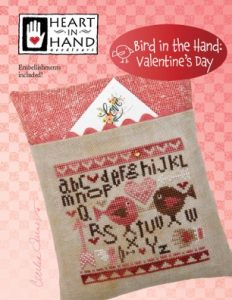
Some of the designs are parts of series. This Valentine’s Day design (though it works any time of the year for the one you love) the newest design in the Bird in the Hand series. Note the small, stitched heart in hand in the lower righthand corner.

Like all craft industries, cross stitch can be cyclical in its popularity. It certainly never goes away but right now it is in an incredible upswing in popularity. A big part of why this is occurring is the subject of my last post on Heart in Hand that I will upload next Saturday, but suffice it to say for now that I learned about this reason as a result of Cecilia asking me to do a caricature.

Famous Soda Pops I Have Known, Vol. III: Dublin Dr Pepper

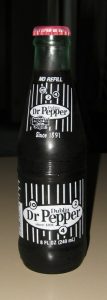
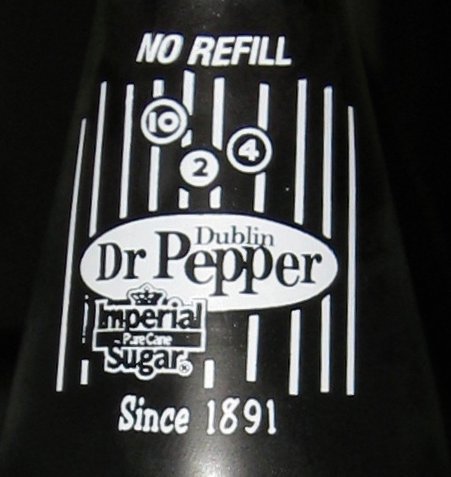
Dublin Dr Pepper no longer exists. A few years ago, the now-defunct pop was made with the original formula including Imperial Pure Cane Sugar and not high fructose corn syrup used in most Dr Pepper. When I had the pictured bottle, the only cane sugar-version of Dr Pepper was produced in Dublin, Texas at the world’s oldest Dr Pepper bottling plant, built in 1891 just six years after the soda pop’s creation in nearby Waco. (Dr Pepper was invented one year before Coca Cola.)

The artwork on the neck of this type of Dr Pepper has the 10-2-4 numbers in different spots than the traditional logo.

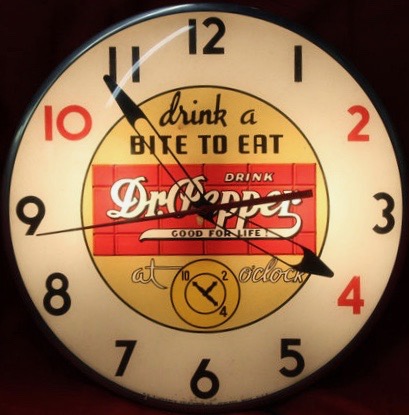
In the early 20th Century, researchers believed that sugar could provide a needed energy boost during the times that an average person experienced a letdown during the day at 10:30 AM and 2:30 and 4:30 PM. A contest was held to create a new slogan with the winner being, “Drink a bite to eat at 10, 2, and 4.”

As an additional bit of trivia, note the absence of a period after “Dr”. It was discarded as part of the name in the 1950s.

The bottling plant in Dublin lost their exclusive license in 2012 for selling their Dr Pepper to broader markets than they were supposed to. (I bought this bottle in Ohio.) A different plant is now authorized by the main company, the Dr Pepper Snapple Group, to produce sugar-sweetened Dr Pepper but it no longer bears the name of any particular town.